My grandmother’s lullaby.
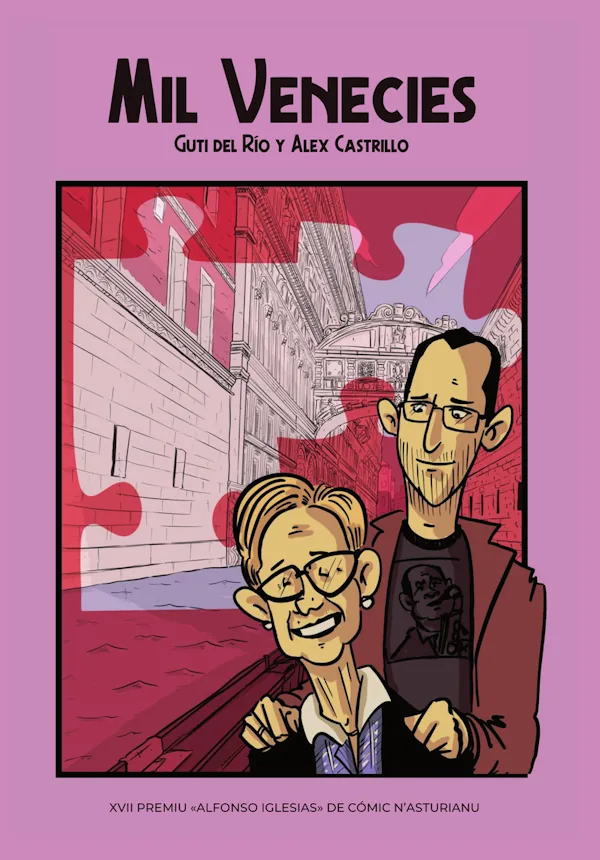
I don't know how long I've been meaning to write about Mil Venecies. This comic, written by my uncle Guti and drawn by my cousin Castri, tells the story of our grandmother Olvido, Guti's mother. It won them the 17th Premiu Alfonso Iglesias de Cómic n'asturianu (yes, it's written in Asturian, but I'd recommend it just the same even if you've never set foot in Asturias). Get the tissues ready, because this review is full of emotion.
Olvido was a daughter of the mining valleys, a village woman with lots of brothers and sisters who had to make her own way in life. It's our grandmother's story, but much of its strength lies in the fact that it's also the story of so many other people's grandmothers, women who faced a life full of hardship, in which they were never anyone's priority (not even their own), until they managed to get through it.
Grandmothers who were the backbone of their families, who raised their children juggling everything and their grandchildren as if they were their own. Whatever it took, always at the cost of giving up their own lives, so that we never went without. And above all, the most important thing: company and attention, which happens to be what I miss most now that she's gone.
Those of you who know me know I always say my grandmother raised me, in the sense that I spent a huge amount of time with her. Summers, weekends, Christmas holidays... Whenever I could, I'd escape to Mieres to be with her. To me she was like a mother.
When Castri told me about the project, I started shaking. Seeing it published was going to be incredibly exciting, but at the same time I knew it would hurt a lot to read it. I remember when he sent me the PDF. I spent an hour and a half crying non-stop, and my eyes were puffy for the rest of the day.
Part of it was crying out of sadness, because the early years were hard. For her and for so many others, but that became part of her foundations and her values. Everything she passed on to others came from there: “prubinos, que no les falte de nada, que ya me faltó a mí bastante” (poor little things, they mustn't go without anything, I went without enough myself). Prubinos (poor little things, in Asturian) was her favourite word.
The other part was crying because I miss her so much and because I blame myself for not having been closer. I often went with Emma so she could see her and they could spend time together, but it weighs on me that they didn't share more of their lives (and me with them).
The comic has an incredible warmth. It manages to portray the darkest sides of the time and fill them with light, just as she did with her personality. The level of detail Castri achieves in the settings, despite how minimalist his technique can be, is astonishing.
Several times I had to stop reading, not only to reach for the tissues, but to talk to him and tell him the panels were coming to life, that it felt like watching an animation. It has a really powerful visual language, pure dynamism, far more than you'd expect from a comic with no action scenes.
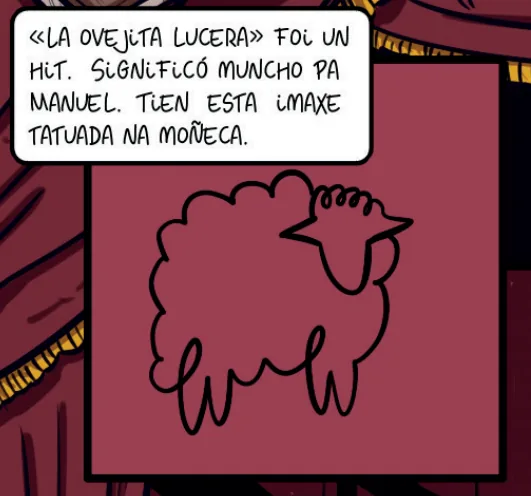
Guti's writing is just as good. Among the memories, history and experiences, there are jokes and nods that only we get at home, but I'm sure they're similar to those in many other families.
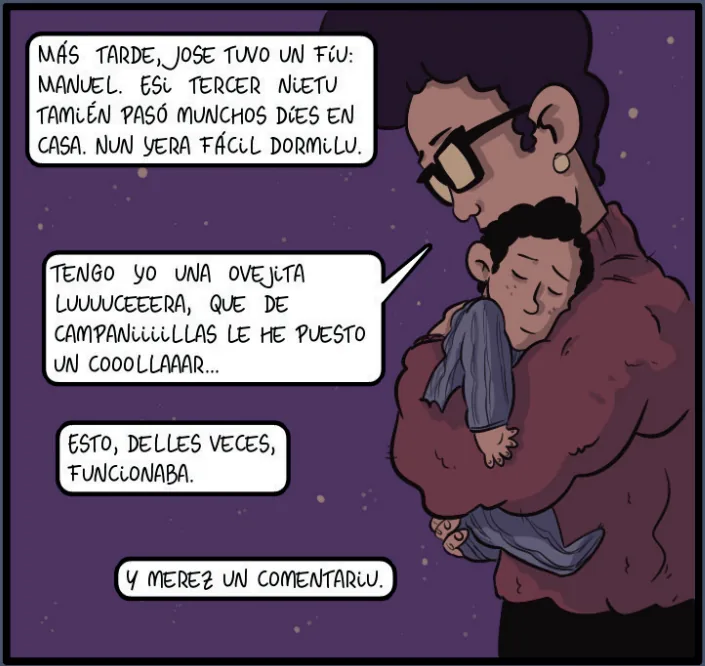
I'm in the book myself, and so is the song she used to sing to get me to sleep (not without effort) and that was always with us. She loved to keep singing it with me even when I was the grown-up one and she was the one curled up next to me, on the sofa in her kitchen or in the bed of the camping caravan. That «ovejita lucera» (the little sheep with the star) will always be part of my life and of my skin.
I could talk about the trips that give the story its name, but I'd rather you read it for yourselves and experience it through your own eyes. I know I'm not neutral, but luckily lots of people around me have read it and been just as taken with it (including my favourite girl from Málaga, thank you Maica!). If you fancy reading it, you'll find it on the Mil Venecies page at Impronta.
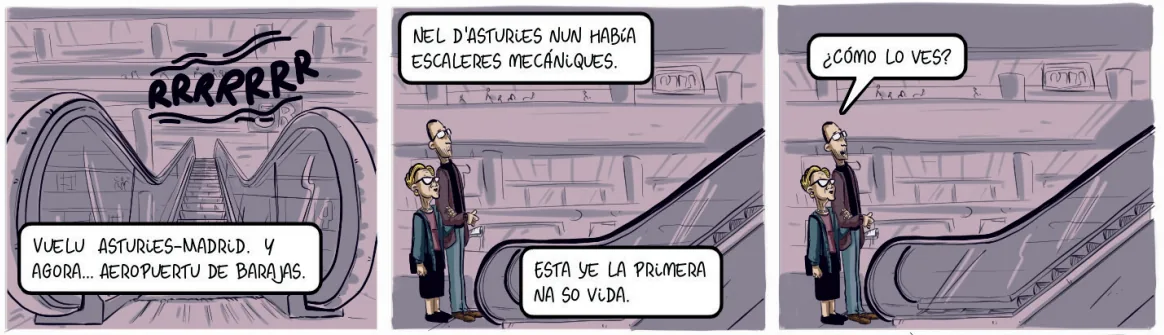
I know this isn't your usual comic review, but, come on, to me it isn't just any book either. There's a piece of me that now lives on the shelves and in the hearts of lots of people, and that's been possible thanks to Guti and Castri's magic.
What would she think if she read it? I have no doubt: “Prubinos, muncho trabayaron” (poor souls, they worked so hard).